Olive oil
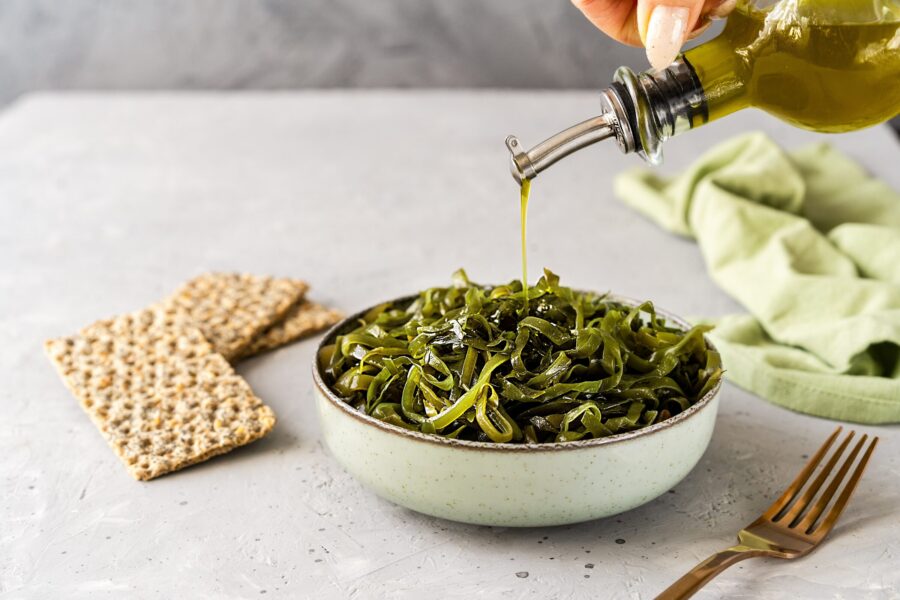
Warm greens with olive oil and lemon
Boiled leafy greens dressed with extra virgin olive oil, lemon and salt: a simple side dish in which the flavour of the oil comes through clearly.

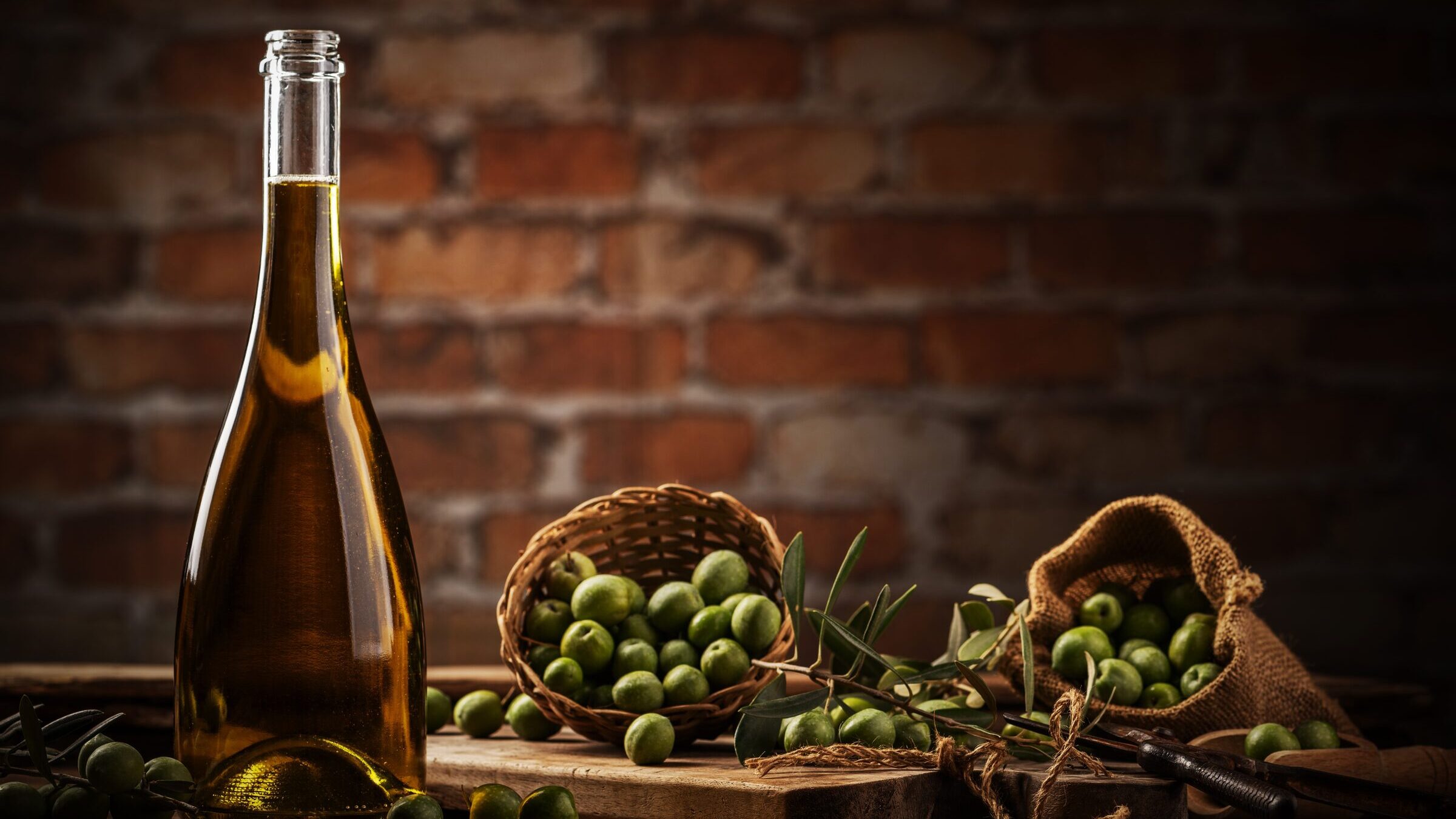
Quality reflected in every drop
The category of virgin olive oil with the strictest limits under European Union law, obtained from olives solely by mechanical or other physical means.
European extra virgin olive oil is one of the most recognised products of European agri-food production, distinguished by its quality, its authenticity and its characteristic flavour.
Under European Union law, virgin olive oils are obtained from the fruit of the olive tree solely by mechanical or other physical means, under conditions that do not alter the oil. They may undergo no treatment other than washing, decantation, centrifugation or filtration. Oils obtained with solvents or with chemical or biochemical adjuvants are excluded.
Of the three categories of virgin olive oil defined in EU law — extra virgin, virgin and lampante — extra virgin has the strictest limits. Its free acidity, expressed as oleic acid, may not exceed 0.8 g per 100 g, and it must meet further physico-chemical and sensory criteria. The sensory assessment is carried out by a trained tasting panel: the panel’s median score for defects must be zero and its median score for fruitiness must be above zero.
Sources: Regulation (EU) No 1308/2013, Annex VII, Part VIII; Commission Delegated Regulation (EU) 2022/2104, Annex I.
Some labels carry the indications “first cold pressing” or “cold extraction”. EU rules allow them only for extra virgin or virgin olive oils obtained below 27 °C: “first cold pressing” from a first mechanical pressing of the olive paste in a traditional system with hydraulic presses, and “cold extraction” by percolation or centrifugation of the olive paste.
Source: Commission Delegated Regulation (EU) 2022/2104, Article 10, points (a) and (b).
Production follows stringent quality, safety and traceability standards, which strengthen consumer confidence and demonstrate the value of the European production system. Under European food law, every food business must be able to identify any person from whom it has been supplied and the businesses to which it has supplied its products, and make this information available to the competent authorities on request.
Source: Regulation (EC) No 178/2002, Article 18.
With its characteristic flavour and its versatility, extra virgin olive oil is an essential ingredient of contemporary cuisine. It is used in salads, with vegetables, in hot and cold dishes and in baking.
To preserve its quality, keep the bottle tightly closed and store it away from light and heat.
Olive oil
Boiled leafy greens dressed with extra virgin olive oil, lemon and salt: a simple side dish in which the flavour of the oil comes through clearly.
Olive oil
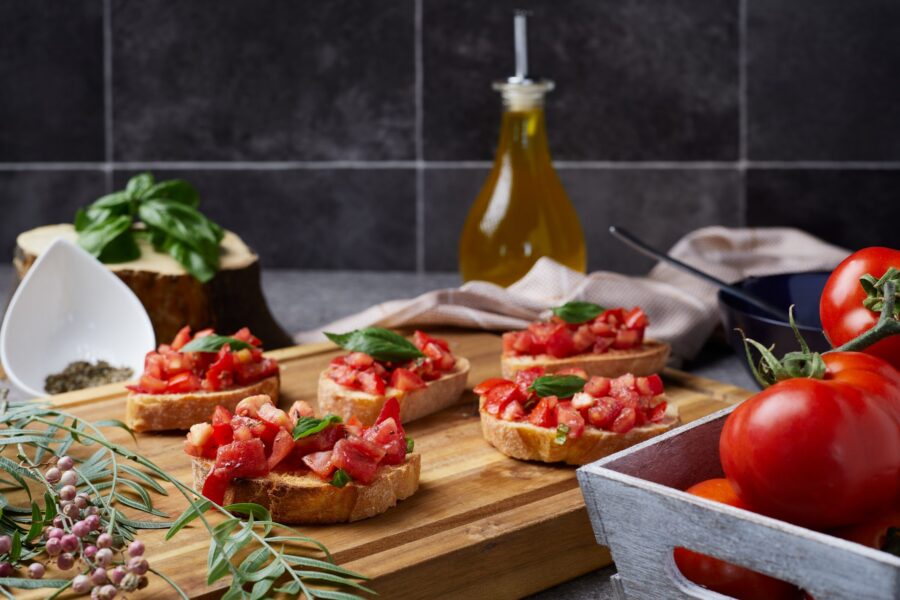
Toasted country bread with ripe tomatoes, garlic, basil and extra virgin olive oil. Salting and draining the tomatoes first keeps the bread crisp.
Olive oil
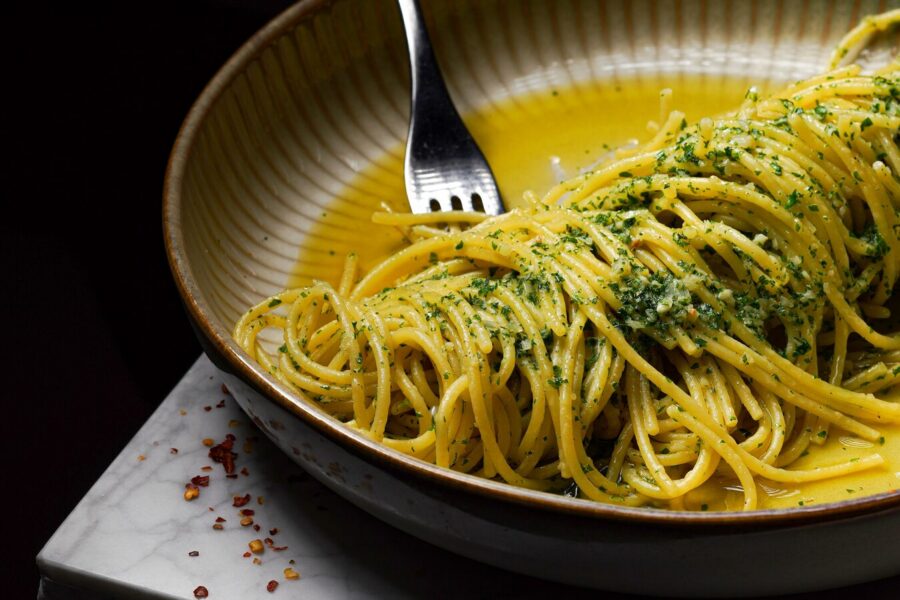
A classic pasta dish made with a few ingredients. A little of the pasta cooking water combines with the olive oil to form a light sauce.